Source RoHS Compliant E Ink Display for Advertising, Surveillance, Mobile Phone
Source 30 rohs compliant e ink display options for graphic design, indoor, and outdoor applications. Compare specifications like screen size, resolution, and display technology from verified suppliers to find the right solution for your project.
Key considerations
Products List






Comprehensive Sourcing Guide
Strategic Sourcing Guide for RoHS Compliant E-Ink Displays
Understanding the Technical Landscape of E-Ink Technology
When sourcing electronic components for B2B applications, the distinction between traditional LCD backlights and E-Ink (electronic ink) technology is fundamental. The market offers a diverse array of display solutions, ranging from standard graphic LCDs to advanced E-Ink modules. A critical observation in the current supply chain is the variation in display technologies. While some products in the catalog utilize LED backlighting, which is typical for standard LCDs, the specific keyword "E-Ink" points to a different class of devices that rely on electrophoretic technology for visual output.
Buyers must carefully differentiate between these technologies based on the application's power and visibility requirements. The provided data indicates that E-Ink displays are characterized by specific resolution and dimension constraints. For instance, observed specifications include a 2.9-inch E-Ink display with a resolution of 296(H) x 128(V) pixels, and a 2.6-inch variant with a resolution of 152(H) x 296(V). These dimensions are not arbitrary; they dictate the physical footprint of the final product. The outline dimensions for the 2.9-inch model are recorded as 79.0(H) x 6.7(V) x 1.18(D) mm, with an active area of 66.90(H) x 29.06(V) mm. Similarly, the 2.6-inch model measures 36.3(H) x 71.8(V) x 1.14(D) mm.
The pixel configuration is another vital technical parameter. The data specifies a rectangular pixel configuration with a pixel pitch of 0.227 x 0.226 mm and a density of 112 DPI. This level of detail is essential for designers who need to ensure that text and graphics render correctly without aliasing. Furthermore, the display color capabilities vary. While some E-Ink modules are noted for B/W/R (Black/White/Red) configurations, other entries in the broader market context mention color capabilities, suggesting that buyers must verify the specific color depth required for their use case. The display technology itself often involves COG (Chip on Glass) processes, which integrate the driver IC directly onto the glass substrate, a method that reduces size and improves reliability for small-sized LCM (Liquid Crystal Module) or E-Ink applications.
Navigating Compliance and Certification Requirements
The core keyword "RoHS compliant" introduces a mandatory layer of due diligence regarding environmental regulations. RoHS (Restriction of Hazardous Substances) is a widely recognized directive that restricts the use of specific hazardous materials in electrical and electronic equipment. While the provided context lists "ROHS" under low-confidence background data, it is crucial for a buyer to treat this as a verification target rather than an automatic attribute of every listed product.
In the B2B procurement process, assuming compliance without documentation is a significant risk. Buyers should request a Declaration of Conformity (DoC) or a Material Declaration from the supplier for every batch of E-Ink displays purchased. The verification process should confirm that the product does not exceed the threshold limits for lead, mercury, cadmium, hexavalent chromium, PBB, and PBDE. The data also mentions "CE" certification in the background, which often accompanies RoHS compliance in the European market, but this too requires independent verification.
It is important to note that compliance is not a binary state of "compliant" or "non-compliant" for the entire supply chain; it is specific to the manufacturing batch and the specific component version. For example, a product with the model number RYE042A or RYE29-link may have different compliance statuses depending on the production run. Therefore, the sourcing strategy must include a clause in the purchase agreement that mandates the supplier to provide updated compliance documentation upon request. The absence of a specific certification mark in the product listing should not be interpreted as a lack of compliance, but rather as a signal to initiate a formal inquiry.
Analyzing Cost Drivers and Pricing Structures
The pricing landscape for E-Ink displays is influenced by a complex interplay of factors, including screen size, resolution, customization, and order volume. The observed price range in the market data spans from $0.01 to $1288 USD. This wide variance is not indicative of a single product type but rather reflects the spectrum from small, low-resolution components to larger, feature-rich modules.
The minimum order quantity (MOQ) is a primary cost driver. The observed MOQ range is between 1 and 1000 units. For prototyping or small-batch production, buyers may encounter higher per-unit costs due to the lower MOQs, whereas large-scale production benefits from economies of scale. The data indicates that some products are available with an MOQ of 1, which is ideal for R&D, while others may require orders of 1000 units to access the lower end of the price spectrum.
Customization is another significant factor affecting cost. The product attributes list "Customization: Available" and "Customized: Customized" as key features. This implies that buyers can request changes to the interface, driver ICs, or physical dimensions. However, such customizations invariably increase the unit price and may introduce longer lead times. For instance, a standard 2.9-inch E-Ink display with a fixed resolution of 296x128 will likely be cheaper than a custom-configured version with a different active area or specific driver requirements. Additionally, the packaging method, such as "Plastic Plate" or "Carton," can influence the final cost, especially for international shipping where bulk packaging is required.
Typical Applications and Use Cases
The versatility of E-Ink technology makes it suitable for a wide range of applications, particularly where low power consumption and high readability in sunlight are paramount. The product attributes explicitly list applications such as "Graphic Design," "Indoor," "Outdoor," "Advertising," "Surveillance," and "Mobile Phone." However, the technical specifications provide more granular insights into the most probable use cases.
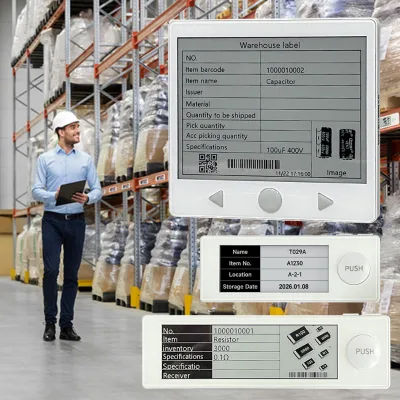
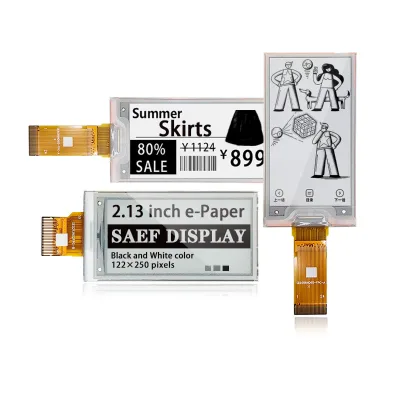
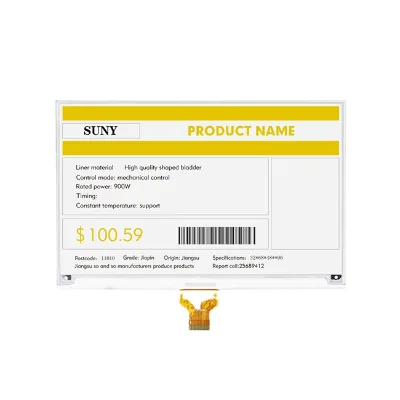
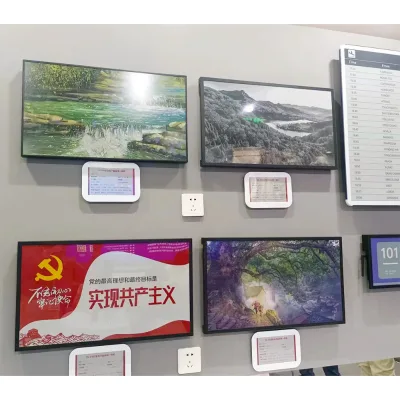
The 2.9-inch and 2.6-inch E-Ink displays, with their specific resolutions and small form factors, are ideally suited for Electronic Shelf Labels (ESL). The data explicitly mentions "2.6 inch Electronic Shelf Label Digital" as a standard product type. These displays are critical in retail environments where digital price tags need to update frequently but consume minimal power. The B/W/R color capability is particularly useful for highlighting price changes or promotional messages on shelf labels.
Beyond retail, the "Small-sized LCM" attribute suggests use in portable medical devices, industrial handheld terminals, and smart wearables. The "Graphic" type designation indicates that these displays are capable of rendering complex text and simple graphics, making them suitable for devices that require high legibility but do not need video playback. The "Outdoor" application tag confirms that these displays are designed to withstand varying light conditions, a key advantage over traditional LCDs which can become difficult to read in direct sunlight.
The data also mentions a 10-inch display with "Touch Screen" capabilities and "Stylus + Capacitive Touch" support, running on "Android 12." This points to a different segment of the market: larger, interactive E-Ink tablets or digital signage. These devices are likely used in "Advertising" and "Surveillance" contexts where long battery life and reduced eye strain are desired. The presence of "WiFi" and "4GB Memory Capacity" in the specifications for the 10-inch model further supports its use as a standalone connected device.
Supplier Evaluation and Quality Control Protocols
Selecting a reliable supplier is as critical as selecting the right component. The data indicates that the products originate from "China," which is a major manufacturing hub for display technology. However, the location of origin does not guarantee quality. Buyers must evaluate suppliers based on their ability to provide consistent quality control and technical support.
Quality control should begin with the verification of the "prod_standard" and "prod_model" consistency. For example, ensuring that the delivered RYE042A units match the specified 4.2-inch standard (or the specific 2.9-inch E-Ink standard) is essential. The "prod_packing" attribute, which varies between "Plastic Plate" and "Carton," should be verified to ensure that the packaging is sufficient to protect the fragile E-Ink panels during transit.
Buyers should also assess the supplier's ability to handle "Customization" requests. The availability of customization implies that the supplier has the engineering capacity to modify the display, but this requires a robust communication channel. A reliable supplier will provide clear timelines for custom orders and will offer samples for testing before mass production. The "Refresh Rate" of 60Hz mentioned in the data for larger models is a specific performance metric that should be tested in the buyer's own application to ensure it meets the required responsiveness for touch interactions.
Furthermore, the "Memory Capacity" and "OS" specifications for larger E-Ink devices must be validated. A supplier claiming "Android 12" support must provide evidence of the software stack compatibility and driver stability. Quality control protocols should include a pre-shipment inspection (PSI) to verify the "Active Area" dimensions and "Pixel Pitch" against the provided specifications. Any deviation in these critical dimensions can render the display unusable in a tightly constrained product design.
Long-Term Procurement and Supply Chain Resilience
Sourcing E-Ink displays is not a one-time transaction but a long-term partnership that requires strategic planning. The "Lead time" and "MOQ" constraints observed in the data (ranging from 1 to 1000 units) suggest that buyers must balance their inventory needs with production schedules. For products with an MOQ of 1000, buyers must forecast demand accurately to avoid overstocking or stockouts.
The "Customization" aspect introduces a layer of complexity to long-term procurement. Once a product is customized, it may become difficult to switch suppliers without incurring significant retooling costs. Therefore, buyers should consider the supplier's capacity for volume scaling and their ability to maintain the same quality standards over time. The "Bare Weight" of 0.365kg for certain models is a factor that impacts logistics costs, especially for large-scale shipments.
Buyers should also monitor the "Display Technology" trends. The shift from COG to other integration methods or the evolution of E-Ink color technology could render current designs obsolete. Maintaining a relationship with a supplier who is at the forefront of these technological advancements can provide a competitive advantage. Additionally, the "Network Communication" capabilities, such as "WiFi," suggest that the supply chain must support software updates and connectivity standards that evolve over time.
In conclusion, sourcing RoHS-compliant E-Ink displays requires a meticulous approach that balances technical specifications, regulatory compliance, cost efficiency, and supplier reliability. By adhering to the verified data points and maintaining a rigorous evaluation process, buyers can secure a supply chain that supports their product development goals while ensuring environmental and quality standards are met. The wide range of available options, from small 2.6-inch ESL modules to 10-inch interactive tablets, offers significant opportunities for innovation across various industries.
FAQs
What display technologies are used for rohs compliant e ink display modules?
The modules utilize COG (Chip on Glass) technology for integration. This method places the driver IC directly on the glass substrate to reduce size. Some variants also feature LED backlighting for standard LCD applications.
Which screen sizes are available for rohs compliant e ink display products?
Available sizes include 2.9 inch, 2.6 inch, and 10 inch displays. The 2.9 inch model measures 79.0mm by 6.7mm, while the 10 inch option supports touch interaction. Smaller modules are often used for electronic shelf labels.
Can I request customization for rohs compliant e ink display specifications?
Yes, customization is available for these display products. Buyers can request changes to dimensions or driver configurations. However, custom orders may require longer lead times and higher minimum order quantities than standard items.
What is the resolution for the 2.9 inch rohs compliant e ink display?
The 2.9 inch display offers a resolution of 296 pixels by 128 pixels. This configuration supports B/W/R color options. The pixel pitch is 0.227mm by 0.226mm with a density of 112 DPI.
How are rohs compliant e ink display products packed for shipping?
Products are typically packed in plastic plates or cartons depending on the order. The 10 inch models often use carton packaging. Buyers should verify packing methods to ensure protection during transit.
Which applications are suitable for rohs compliant e ink display technology?
These displays are suitable for indoor and outdoor advertising or surveillance. They are also used in mobile phones and graphic design tools. The technology is ideal for electronic shelf labels due to low power consumption.